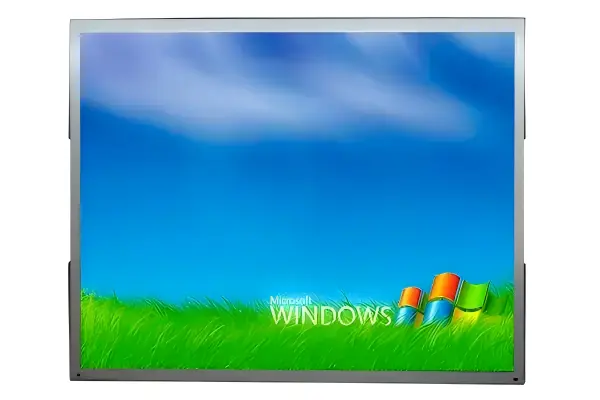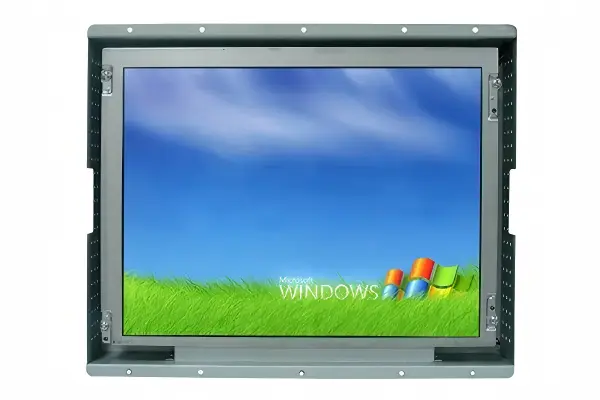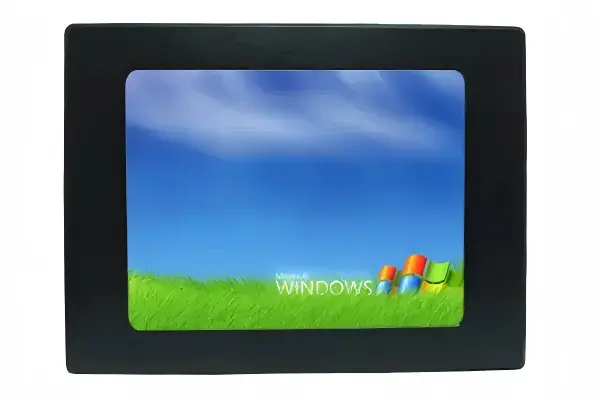
There are two ways to approach industrial display selection. One is by application: "I need a display for an outdoor EV charger." The other is by parameter: "I need a 15.6-inch, 1000-nit, optically bonded IPS panel with projected capacitive touch, LVDS input, and IP65 front."
This guide covers the parameter approach — the engineering checklist. If you want the application-based walkthrough, read our application selection guide.
At AplusLCD, about half of our OEM inquiries arrive with a complete specification sheet. The other half arrive with a question like "we need a screen for our machine." Both are valid. But the first round of clarification almost always covers the same five topics.
1. Panel Technology — IPS, VA, or TN?
This is the first branching point in any selection process. The choice determines viewing angle, color accuracy, contrast, and — indirectly — whether your HMI will look consistent when viewed from different positions on a factory floor.
| Property | IPS (In-Plane Switching) | VA (Vertical Alignment) | TN (Twisted Nematic) |
|---|---|---|---|
| Viewing angle (H/V) | 178°/178° | 170°/160° (typical) | 140–160°/120–140° |
| Contrast ratio (native) | 1000:1 – 1500:1 | 3000:1 – 5000:1 | 600:1 – 1000:1 |
| Color shift off-axis | Minimal — <ΔE 3 at 45° | Noticeable above 30° | Severe above 20° |
| Response time (GtG) | 8–14 ms (typical) | 4–8 ms (typical) | 1–5 ms |
| Brightness potential | Good (85–90% transmissive) | Excellent (88–92%) | Good (83–88%) |
| Cost relative to IPS | Baseline | 10–20% lower | 15–30% lower |
| Best for | Public kiosks, multi-user HMIs, outdoor displays | Single-viewer straight-on displays, high-contrast indoor | Legacy replacement, cost-sensitive, fast-refresh |
Our bias: we recommend IPS for nearly all new designs. The viewing-angle forgiveness matters more in real-world installations than a 10% contrast ratio advantage on paper. We have seen too many factory-floor HMIs where the operator stands at a 45° angle to the screen and cannot read a VA panel's edge text.
The exception: single-user applications where the viewer is always directly in front (vehicle dashboards, seated operator stations). Here, VA's higher native contrast can provide a noticeably richer image at the same backlight power.
2. Resolution and Viewing Distance
One of the most common mistakes we see in OEM inquiries is over-specifying resolution. A 4K display on a 10-inch HMI panel does not improve legibility — it just shrinks UI elements and increases the interface bandwidth requirement.
The metric that matters is pixels per degree (PPD) of visual angle — how many pixels the human eye can resolve at a given distance.
For a person with 20/20 vision, the eye resolves approximately 60 pixels per degree. [1] At a viewing distance of 1 meter, a 15.6-inch Full HD (1920×1080) panel provides roughly 80 PPD — above the acuity threshold. The same panel at 4K (3840×2160) would provide ~160 PPD — nearly 3× beyond what the eye can distinguish at that distance.
Practical resolution-to-distance recommendations for industrial applications:
| Screen Size | Viewing Distance | Recommended Resolution | PPD at Distance |
|---|---|---|---|
| 7–10.1" | 40–60 cm (arm's length) | 1024×600 – 1280×800 | 55–75 |
| 12.1–15.6" | 60–100 cm | 1366×768 – 1920×1080 | 60–85 |
| 15.6–21.5" | 80–150 cm | 1920×1080 | 55–90 |
| 21.5–32" | 1.5–3 m | 1920×1080 – 3840×2160 | 45–70 |
| 43" and above | 2–5 m | 1920×1080 – 3840×2160 | 30–55 |
A PPD of 50–70 is the sweet spot for text-heavy industrial interfaces. Below 40 PPD, individual pixels become distinguishable. Above 80 PPD, you are burning interface bandwidth and GPU resources for resolution the user cannot perceive.
Our recommendation: if someone on your team is pushing for 4K on an industrial HMI, ask them to stand at the actual viewing distance and compare a 1080p and 4K panel side by side. We have conducted this test with clients and the result is almost always that 1080p is indistinguishable at >1 meter.
3. Backlight Type and Brightness
Three backlight technologies dominate industrial LCDs. The choice affects brightness, dimming behavior, lifespan, and — critically — the type of LED driver board you need.
| Backlight Type | Brightness Range | Dimming | Life (L70 typical) | Cost | Best For |
|---|---|---|---|---|---|
| Edge-lit LED | 250–800 nits | PWM, 0–100% | 50,000h @ rated | Lowest | Indoor panels, ≤21.5" |
| Direct-lit LED array | 500–2500 nits | PWM, 0–100% | 40,000h @ rated | Medium | Outdoor, high brightness |
| Direct-lit with local dimming | 500–2500 nits | Per-zone PWM | 35,000h @ rated | Highest | High contrast outdoor, HMI with dark backgrounds |
| CCFL (legacy) | 200–500 nits | Analog, ~20–100% | 15,000–25,000h | N/A (phasing out) | Replacement only |
If you are replacing a CCFL-backlit display in an older machine, note that CCFL dimming is analog (voltage-controlled) while modern LED backlights use PWM (pulse-width modulation). The dimming curve is different — a 50% setting on a CCFL dimmer does not necessarily correspond to 50% PWM duty cycle. Test the dimming range on a sample unit before committing to a panel for retrofit projects. We have handled enough retrofits to know this is a common stumbling block.
4. Interface Protocol
The display interface determines the cable type, maximum cable length, and the GPU/processor you need on the controller board. If your project will use a controller board rather than a direct panel connection, our LCD panel kit range bundles matched panels, controller boards, and accessories — with interfaces pre-configured for plug-and-play integration.
| Interface | Max Resolution @60Hz | Max Cable Length | Signal Type | Typical Use |
|---|---|---|---|---|
| LVDS (single-link) | 1366×768 / 1920×1080 (dual) | 0.5–1 m | Differential, parallel | Embedded systems, ARM SBCs |
| eDP (Embedded DisplayPort) | 3840×2160 | 0.3–0.5 m | Packet-based serial | Tablets, laptops, compact embedded |
| HDMI | 3840×2160 | 5–15 m | TMDS serial | Standard industrial, off-the-shelf SBCs |
| VGA (legacy) | 1920×1080 (analog) | 3–5 m | Analog RGB | Legacy industrial, CNC machines |
| MIPI DSI | 1920×1200 | 0.1–0.3 m | Low-voltage serial | Raspberry Pi, small ARM boards |
Our typical configuration for new OEM designs: HDMI or LVDS input with an onboard controller that translates to the panel's native LVDS/eDP interface. This separates the interface protocol choice from the panel choice — the controller handles the translation.
For retrofit projects replacing VGA-input displays: you will need an active converter (VGA → LVDS or VGA → HDMI). Passive adapters do not work because VGA is analog and LVDS/HDMI is digital. Budget $15–35 for the converter board.
5. Touch Technology
If your application requires touch, the technology choice depends on the environment, the required touch accuracy, and whether users wear gloves.
| Technology | Multi-Touch | Glove Operation | Surface Durability | Cost | Best For |
|---|---|---|---|---|---|
| Projected Capacitive (PCAP) | Yes (up to 10+) | Needs special gloves | 7H tempered glass | Medium | Indoor kiosks, consumer-facing, high accuracy |
| Resistive (5-wire) | Single touch | Yes (any pressure) | PET film (scratch-prone) | Low | Glove-heavy industrial, cost-sensitive |
| Infrared (IR) | Yes (up to 10+) | Yes (any object) | No overlay needed | Medium–High | Large format (>32"), outdoor, harsh environment |
| Surface Acoustic Wave (SAW) | Single touch | Yes (soft objects) | Glass (durable) | Medium | Clean indoor, medical, retail POS |
For outdoor applications, we recommend IR touch for large formats (32"+) and PCAP with a ruggedized cover glass for smaller formats (10–22"). Resistive is still the default for heavy-glove industrial environments where operators wear thick work gloves — but it is increasingly being displaced by specialty PCAP controllers that can handle gloved operation through tuning. [2]
One thing we always verify during selection: the touch controller's report rate. Standard USB touch controllers report at 100–150 Hz. For industrial HMIs, this is fine. For applications requiring fast gesture response (gaming, rapid scrolling), look for controllers capable of 200+ Hz report rate — the difference is noticeable.
Quick Reference — Parameter Decision Flow
If you are starting from scratch, here is the sequence we follow when helping a client narrow down specifications:
Application Environment
├── Indoor, controlled → IPS or VA, 250–500 nits, air bonding OK
│   ├── Single user, straight-on → VA for higher contrast
│   └── Multi-user, off-axis → IPS for viewing angle
├── Semi-outdoor (canopy, window-adjacent) → IPS, 700–1200 nits, AR coating recommended
└── Full outdoor → IPS, 1000–2500 nits, optical bonding + multi-layer AR

Touch Required?
├── No → Standard cover glass, no additional overlay
├── Yes, gloves → Resistive or tuned PCAP with glove support
├── Yes, no gloves → PCAP (standard)
└── Yes, large format (>32") → IR touch frame

Interface
├── New design, compact → eDP or MIPI DSI direct to panel
├── New design, standard → HDMI to controller board
├── Retrofit VGA → Active VGA-to-LVDS/HDMI converter required
└── Long cable run (>5m) → HDMI (not LVDS)

Enclosure
├── Open-frame (inside customer enclosure) → Panel only, IP rating from customer enclosure
├── Panel-mount (front-sealed) → Front IP65/IP66, rear open or covered
└── Fully enclosed → IP65/IP66 overall, budget thermal headroom
Frequently Asked Questions
How do I choose between open-frame and panel-mount?
Open-frame displays are designed to be installed inside a customer's own enclosure — the customer's front bezel provides the seal. Panel-mount displays come with their own sealed front bezel and gasket, designed to be mounted flush from the front of a cutout. Choose open-frame if your enclosure is already designed to accept a display module and you control the front bezel tolerances. Choose panel-mount if you need an independent front IP seal and your enclosure precision is ±1mm or looser. See our [detailed comparison](/blog/open-frame-vs-panel-mount-monitor-which-to-choose/).
Can I use a consumer monitor outdoors with a shade cover?
We strongly advise against it. Consumer monitors are not designed for the temperature extremes, humidity, or UV exposure of outdoor environments. The polarizer will degrade under UV (turning yellow/brown within months), the backlight LED driver is not rated for >40°C ambient, and the housing typically provides zero ingress protection. The shade cover addresses only direct sunlight — not temperature, humidity, or dust. The total cost of replacing failed consumer monitors typically exceeds the cost of a proper industrial display within the first replacement cycle.
What is the minimum information I need to request a quote?
To get an accurate quote from any industrial display supplier, you need: (1) screen size and aspect ratio, (2) required brightness (nits), (3) whether touch is needed and type (PCAP/resistive/IR/none), (4) front IP rating requirement, (5) interface type (HDMI/LVDS/VGA/eDP), (6) estimated annual volume, (7) whether optical bonding is required. With these seven items, a supplier can provide a meaningful quote within 1–2 business days.
Get Your Specification Reviewed
Send us your requirements — even if they are rough. Our engineering team will recommend a specific panel configuration with a complete BOM estimate, typically within one business day.
Request a Specification Review →Footnotes
-
J. M. Foley, A. van Dam, et al., Computer Graphics: Principles and Practice, 3rd Edition. Addison-Wesley, 2013. Chapter 5: Visual Perception, pp. 167–203. ↩
-
N. Matsushita, "Projected Capacitive Touch for Gloved Operation in Industrial Environments," SID Symposium Digest of Technical Papers, Vol. 49, Issue 1, pp. 913–916, 2018. ↩